CoreWeave, the Nasdaq-listed AI infrastructure giant, already has over 100 customers in physical AI, spanning robotics, autonomous vehicles and industrial applications.
The US-based company is one of the so-called ‘neoclouds’ that provides the Graphics Processing Unit (GPU) compute, cloud infrastructure and software that businesses use to train and run large-scale AI models.
Now it’s pushing further into the engineering side of the equation, launching a new physical AI field engineering team today that is designed to put CoreWeave engineers directly alongside customers to build, test and deploy AI on their own data.
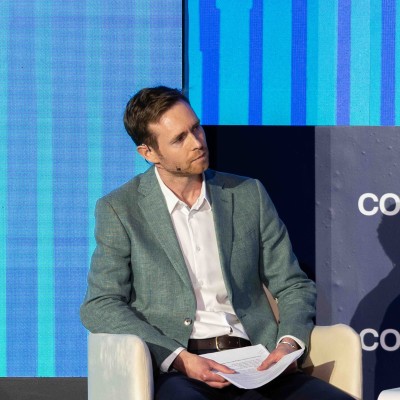
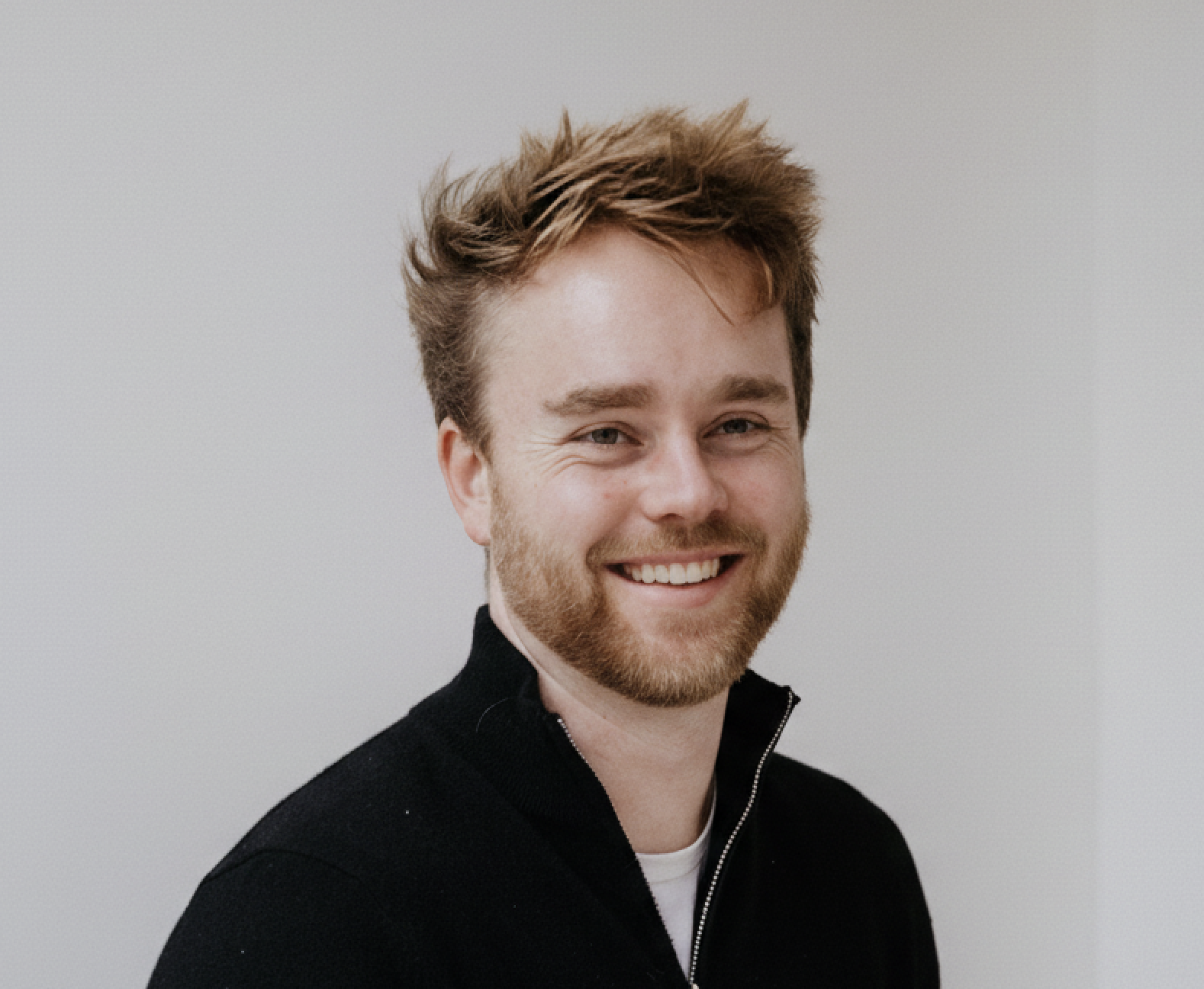
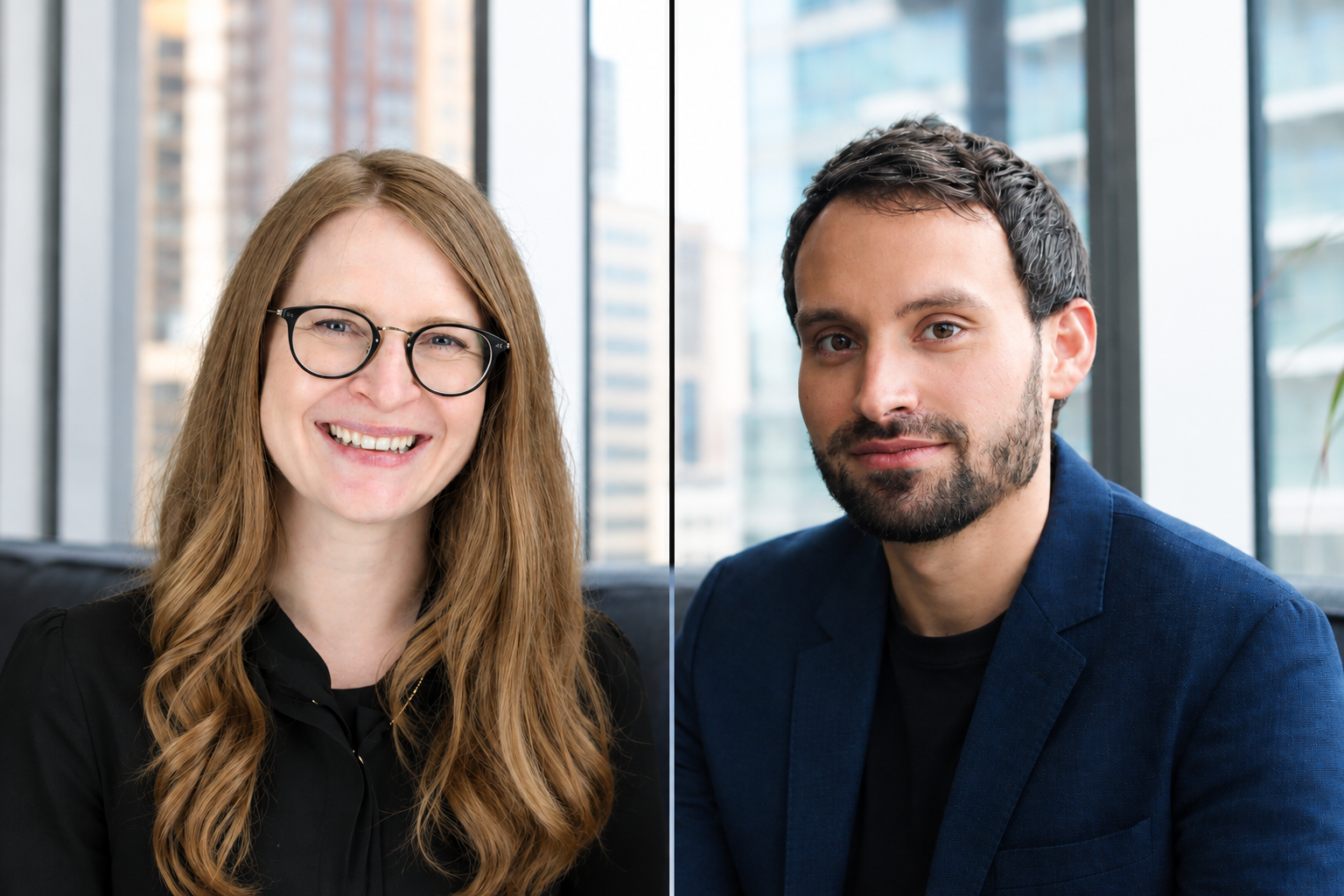
At the centre of that push is Dr Richard Ahlfeld, CoreWeave’s Senior Vice President for Physical AI, and Sasha Manuilova who leads CoreWeave’s robotics business.
Dr Ahlfeld brings deep engineering and AI expertise to the role. He founded Monolith AI after completing his PhD in Aerospace Engineering at Imperial College, working on everything from Rolls-Royce aircraft engines to NASA’s Mars rocket and the Artemis mission. His work earned him a place on MIT Technology Review’s Top 10 Innovators Under 35 list. Monolith raised almost $50 million before CoreWeave acquired it shortly after its $21 million Series B.
The logic behind the acquisition is now becoming clear. Monolith specialised in the messy, real-world data that engineering companies struggle to use; CoreWeave brought the vast compute, simulation and AI infrastructure needed to turn that data into something useful. Today’s launch effectively brings the two together with engineers working inside customer teams to bridge the stubborn gap between cutting-edge AI and the physics of the real world.
In this exclusive interview, Dr Ahlfeld and Manuilova explain where the company sees the biggest opportunities in physical AI, why it views data centres as “physical AI factories”, what happens when you can run more than a million simulations in 12 hours, and how CoreWeave is putting more than 250,000 GPUs across 51 data centres and 1.5 gigawatts of active power behind the physical AI boom.
IZON: Can you break down how you categorise the physical AI sector?
Sasha Manuilova: Sure, we split physical AI across three verticals – robotics, autonomous vehicles and industrial. In robotics we work with almost all of the robotics foundation model and world model builders, as well as companies building robotic brains, humanoids and other embodied AI systems. These customers rely on our compute and our tooling as they build out the full vertical stack. Autonomous vehicles are another major sector for us with Wayve being one of our flagship clients, and industrial is a significant area as well, where we work with large industrial conglomerates such as Caterpillar to enable their AI initiatives.
Which is the biggest subvertical?
Sasha: Robotics is definitely our biggest subvertical, both in terms of customer acquisition and revenue. When we say robotics, we include foundation model builders for robotics, world models and all sorts of embodied AI, not only humanoids. Those will be the main categories for us.
What do you think is driving that demand?
Sasha: It’s the sheer volume of what they need to train. I think there is a kind of dichotomy in physical AI. On one side, you have foundation model builders trying to get to generalization and leapfrog a lot of the issues with collecting data for specific use cases. There is a lot of VC money being poured into those companies because if that wins, you kind of solve so many things. On the other side, you have customers picking a very specific use case that fits neatly into an existing workflow, where they can easily check the ROI and test and fail without it being the end of the world.
I actually wouldn’t place my money on either of those. I think there will be a convergence at some point, where both sides’ ideas and learnings come together. Both are extremely important to making robotics more ubiquitous. A great example of that is what Skild AI just demonstrated with in-context learning, where you can submit a little snippet of video and have the robot generalize from that small snippet. That’s a huge step forward for the industry.
Can you walk us through the CoreWeave physical AI stack end-to-end?
Sasha: One thing that we are talking a lot about internally is that we truly believe it’s not a stack but more of a loop, especially in physical AI. Everything starts with data, and you go through curation, simulation, training, evaluation and deployment – all of this has to be connected. At each step, you’re feeding back into the training loop. We have the compute for training and partner with best-in-class solutions for simulation and curation. With Weights & Biases, which we acquired last year, we complete the loop with the observability layer and the ability to collect feedback and feed it back into the training loop.
It seems like there are so many different models and solutions now. This must be pretty overwhelming if you’re a founder starting a new robotics company.
Sasha: Yes, one of the biggest challenges we hear from customers is how separate all the solutions are, and how many different pieces they need to stitch together. Nothing talks to each other, and a lot of time is spent by developers figuring out the glue between things. This is the ultimate goal for us: how do we change this through the products we build, things we already offer, acquisitions like Weights & Biases and Monolith, and our partners. The ability to bring all of these pieces together in one platform is what makes CoreWeave pretty special.
Dr Richard Ahlfeld: Every quarter is essentially a new landscape, and so keeping up with this really fast-moving space and making sure that people have the best customer experience for large-scale computing models, that’s kind of our job.
Today you’re announcing that Monolith is becoming CoreWeave’s Physical AI Field Engineering team. What’s the backstory to that, and how did you get from the Monolith acquisition to this new offering?
Richard: Monolith brought unique expertise in real-world data and field engineering. We’d run hundreds of projects with large enterprises, working directly with their engineers to identify problems that could be solved with AI, prioritise them and then build the solution end to end.
The announcement is really about bringing that capability into CoreWeave. Monolith is becoming our Physical AI field engineering team, where our engineers work alongside customer teams to build, validate and deploy AI using data they already own, from test results and simulation output to production sensors and live telemetry.
We can now combine that domain expertise with CoreWeave’s compute, tooling and broader physical AI stack. The goal is to close the gap between domain expertise and applied AI, and get customers from identifying a problem to a working solution in their existing workflows.
I saw that CoreWeave managed to run 1.25 million simulations in the open-source simulator CARLA. What becomes possible at that scale that isn’t possible with 10,000 or 100,000 simulations?
Sasha: Yes, we ran over a million simulations in just 12 hours to demonstrate how performant our compute infrastructure is. We are now able to explore essentially an infinite number of simulations in a much shorter time frame. And with more simulations comes a higher chance of encountering edge cases that you would usually only come across in real data. Collecting that real life data is expensive and time-consuming, so ultimately you can bring things to market faster and in a safer manner by decreasing the number of unknown unknowns.
Richard: I want to add here, Ben, that I don’t think people fully understand yet how powerful the infrastructure built for Large Language Models by companies like OpenAI and Anthropic is, or how impactful it actually is within the engineering world.
To give you an example, I did my PhD with NASA, where they were always talking about the 2030 simulation challenge, when you would be able to run large-eddy simulations [LES]. At Imperial College, a large-eddy simulation is something that you would ask for tens of thousands in budget on a supercomputer, and then maybe, if you’re designing an engine at Rolls-Royce, you run five or six.
On CoreWeave’s infrastructure, you can run 10,000 in half a day, and that’s not even pushing it. You could do a lot more. So, the scale of the supercomputer that’s been built here, which you can actually make available to these companies, and how quickly you can iterate, is mind-blowing.
What are some of the challenges you’re witnessing in closing the sim-to-real gap?
Richard: I spent five years at Monolith talking about intractable physics and about all of the things that simulations just can’t get right in the real world. For example, getting a robot to hold something and the mechanics behind that is really difficult to simulate and capture correctly. How water and liquid move is ridiculously hard. It’s a mathematical Millennium problem. Chaotic behaviour of humans or any other sort of multi-body system is very hard to capture every little edge case. Sensor failures or hardware failures are very difficult to capture in simulation because they do whatever they want. And so these are the specific areas where you need to capture real-world data. And as CoreWeave has all these GPUs and data centres across the globe, we are sitting on one of the biggest data sources for how to run GPUs in the world. This means we have a lot more insights into real-world failure, real-world optimisation and so we use that knowledge and that size as an advantage to improve the whole system.
The other day we were told to ditch the niceties like ‘please’ and ‘thank you’ when talking to digital AI models like ChatGPT to save on energy use. Providing the infrastructure to train the models that you’re talking about must be a totally different beast in terms of compute?
Richard: We need more compute in terms of GPUs than we’ve ever needed before. We have more than a quarter of a million GPUs in 51 data centres across the globe and 1.5 gigawatts of active power.
Where are these data centres stationed?
Richard: We have a number in Europe, where there’s a push for data centres to use renewable energy. Within the US, it’s more complicated. Renewable energy is an area I personally care a lot about and I speak to our VP of Sustainability regularly and have offered support in a lot of different projects.
What advice are you giving to your VP of Sustainability?
Richard: Physical AI is not just a tool for robotics companies. A data centre, at the end of the day, is a physical AI factory as well. You have chips that need cooling, you need control algorithms to run the whole thing and you have a lot of telemetry data. There are a lot of things we can tweak and optimise when thinking about how to run a data centre, from cooling to energy consumption, using an AI model to make it lower impact across all of the critical metrics. That’s the most obvious area where the physical AI team is working.
Monolith has also worked a lot in hydrogen fuel cells. We’re seeing data center builders start to deploy hydrogen fuel cells as backup energy generation. Selecting technologies that can act as backup for data centres that are not diesel generators requires a lot of expertise in trying to figure out how you actually make that work. We obviously have a lot of people working on how we can do this.
You mentioned earlier in the interview that every quarter is essentially a new landscape. How do you foresee the last four months of the year unfolding?
Richard: I think humanoids may get all the fancy press releases, but the really interesting work is happening in warehouses, logistics, manufacturing. It’s not as fun on TikTok but that’s where the massive opportunities are.
Sasha: One thing I will say at the end, Ben, is that I hope we were able to convey that we’re not just a GPU provider for physical AI. We spoke about data centres above, and what we’re able to do is bring what we learn from our customers back to our product teams, which is extremely powerful. The true innovation in physical AI is happening at the product layer, where we’re really thinking deeply about what these companies need, what the pipelines are, how people are actually going to use these tools, and how we accelerate their time to market with our software stack and essentially close the loop.
I think you’ve closed the loop well on this conversation.
Sasha: Absolutely.
This interview has been edited for clarity and length.