For much of 2026, Mobileye has been at the centre of the news. First, the Intel subsidiary and publicly traded company acquired Mentee Robotics for $900 million, a deal it said uniquely positioned Mobileye to lead the evolution of physical AI on a global scale. Then came the announcement that it would launch its own robotaxi service, marking a major strategic expansion for one of the autonomous vehicle industry’s most established technology suppliers. Most recently, Mobileye founder and CEO Amnon Shashua shocked the tech industry by announcing he would step down from the top leadership post after nearly three decades.
But amid all these changes, where does this leave Mentee?
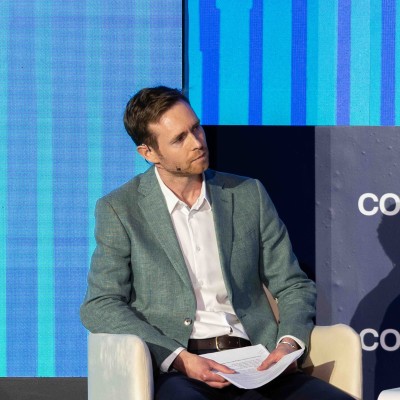
Today, IZON’s Executive Editor Ben Hubbard speaks exclusively with Professor Lior Wolf, Executive Vice President of Humanoids at Mobileye and former CEO of Mentee Robotics, to understand where the humanoid business fits into Mobileye’s evolving strategy and what exactly it is building toward.
Wolf has spent much of his career at the intersection of AI and computer vision. He completed his PhD in computer science at the Hebrew University of Jerusalem under Amnon Shashua, before doing a postdoc at MIT and becoming a professor at Tel Aviv University. He later joined Facebook AI Research, where he became a Director working on generative AI.
It was during his time at Tel Aviv University that he became increasingly convinced robotics represented the next major challenge for AI. Around five years ago, he reunited with Shashua and fellow Mentee co-founder Prof. Shai Shalev-Shwartz to explore what came next.
IZON: Let’s start with the idea. How was Mentee Robotics born?
Lior Wolf: When I reunited with Amnon and Shai, we started discussing what the next big challenge for AI would be. Language was already looking increasingly solvable, and computer vision was becoming far more capable, but robotics remained largely unsolved. We realised that the sample complexity of robotics was simply too high. Even with a huge fleet of robots being teleoperated 24/7, we still wouldn’t be able to collect enough data. So, from our very first document, we realised that the only way forward was to work in a simulator.
But if you just work in a simulator, you’re essentially developing a computer game. What you learn there doesn’t necessarily translate to the real world. You need to make the transfer. That has been our mission from the very beginning: to build algorithms that can take a task, learn it inside a simulator, and then apply what they’ve learned in the real world. We call this Sim2Real, and it’s what we’ve been focused on ever since.
Mentee has taken a vertically integrated approach, designing not only the software but also the hardware, actuators and even the robot’s hands in-house. What advantages does this give you?
When we started, we didn’t have much choice when it came to hands. There simply weren’t viable hands available on the market. Now there are more companies developing them, but we already have four years of experience building our own.
The broader reason for vertical integration is that we want full control over everything that goes inside the robot and complete transparency. We want to model things as accurately as possible because that helps us reduce the gap between simulation and reality. If you take something from another company, it’s essentially a black box. They won’t necessarily give you all the software or the full specifications. You can try to measure it, but it’s never perfect and if you identify an opportunity to improve the Sim2Real gap, you can’t necessarily implement it because it’s not your product.
With our own hardware, we’re able to design everything specifically to minimise that gap. We can put algorithms directly into the motor drivers, for example, and we have complete visibility into the control algorithms. That gives us capabilities you simply can’t get from an off-the-shelf component. It was one of the best decisions we’ve ever made.
Was that decision driven more by cost or control?
It’s both. I don’t think we would have been able to deliver what we’re delivering if we relied on other companies to build these components for us. It would have been a dead end, either because of the cost, the algorithms inside the components or the lack of transparency. This isn’t a product that you build once and then forget about. It’s constantly improving. We’re continually trying to minimise the Sim2Real gap and improve the overall performance of the robot, so having control over those components is extremely important.
There’s also a substantial cost advantage. If you control everything, you can optimise the bill of materials and bring the cost down. Take our hands for instance. The bill of materials for our hands is in the thousands of dollars. If you tried to purchase a comparable hand, it could cost tens of thousands of dollars, sometimes many tens of thousands. Having the ability to control the form factor and manufacture them ourselves reduces the cost significantly. Another example is our motor drivers. We have 31 of these in each robot, and they come in multiple sizes. If you hire another company to build them for you, they need to create multiple versions, and the cost multiplies because you have so many units. So yes, both control and cost are important, but control is what makes the whole system possible.
Building so much yourself must inevitably take longer than buying off-the-shelf hardware. How much will this delay your go-to-market strategy?
When we talk about building, we’re mostly talking about assembling. If I say we have our own motor drivers, for example, that means we have a PCB [printed circuit board] supplier, electronic component suppliers and an assembly partner. The parts are shipped to us and we do the final assembly. So the manufacturing timeline isn’t necessarily any different from what you’d expect if we bought the component from a third party.
If we’re talking about development, well that’s a continuous effort in any case. I have one version of the robot today and I’ll have another version tomorrow. The important thing is that the development cycles between generations are becoming shorter and shorter.
Can you tell me how much a MenteeBot costs to build today?
We reassess that all the time, and I don’t want to share an exact number but I can say that our target is to get to an extremely capable robot for below $20,000. The actual cost right now is higher than that.
You said in a recent talk that the ultimate goal is for a MenteeBot to learn a new task from just one or two demonstrations and then perform it reliably in the real world. How close are we to that today, and what’s still preventing it from becoming routine?
We’re already able to demonstrate it, and we’re turning it into a more and more robust pipeline. There are two main limiting factors here though.
First, the robot needs to see and understand the world. We need to take what’s around us and bring it into the simulator. That’s becoming easier with generative AI. You can take a video of the world, understand the physical objects inside it, model them and put those objects into the simulator.
The second challenge is shortening the actual training process. You can’t have top-end servers running for days every time you want a robot to learn something new. We need to reduce that process to minutes and this is where our AI team is currently focused: making learning more efficient by giving the system the right priors and allowing it to learn from previous tasks before it encounters the new one. That’s what makes the one-shot or two-shot approach possible.”
What sort of tasks are your robots completing at the moment?
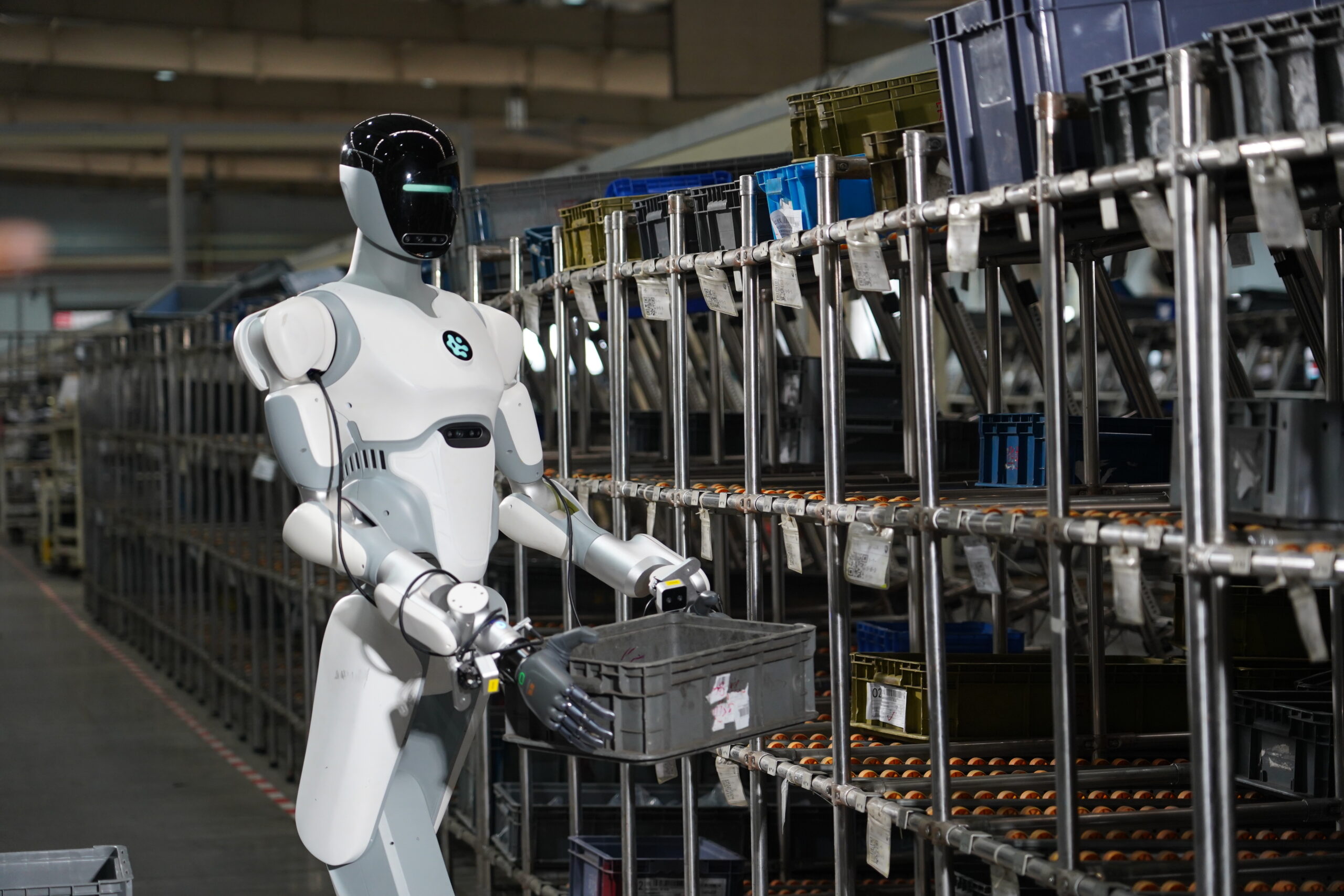
So far, we’ve demonstrated increasingly complex manipulation, from picking up awkward objects and placing them to handling them with one or both hands. The next step is bringing those capabilities together with accurate localisation and movement, so the robot can identify an object, approach it, grasp it and move it to the right place as part of a complete task.
I recently saw a demo of your robots making coffee for Mobileye employees and they appeared relatively slow. Is that a limitation for commercial deployment?
Robots need to be somewhat slower in order to be safer and more stable, but I see this as temporary. Nothing in the hardware fundamentally limits the robot from moving at higher speeds. The control algorithms, Sim2Real and AI simply need to improve. As those capabilities improve, the robot can move faster while maintaining the same level of stability and safety, so I don’t view this as a fundamental limitation of humanoid robotics.
Which industries do you think will see meaningful deployment first?
There are definitely opportunities in warehouses and manufacturing, where tasks can be highly repetitive and the level of variation is relatively low.
But strategically, at Mentee by Mobileye, we’re focused first and foremost on building our own complete, general-purpose robot and then deriving capabilities from that product for specific industries. The home butler is our north star. This is the main product we’re building and the ultimate test because it requires such a broad range of capabilities: scene understanding, robustness, spatial awareness, perception, reasoning and control, all working together with the robot’s physical movements. Once we have that complete product, we can derive subsets for specific industries. We believe that is where the biggest differentiation will eventually be. In a complete product such as a home robot, the differences between technologies become much clearer because you need the entire package. How good is your AI? How practical is it? How good is your control, perception, reasoning and Sim2Real capability? And, crucially, how well do all those things integrate? Integration is extremely important.
As humanoids become more capable, do you think they’ll eventually replace jobs that people actually want to do, rather than just taking on dangerous or undesirable work?
Initially, humanoids are more likely to address jobs that people are unwilling or unable to do, particularly where there are already significant labour shortages. I’d be much more worried about people working in front of computers first, as the impact of agentic AI on computer-based work is going to come much faster than the impact of robotics on physical jobs. It’s going to take some time before a robot replaces a plumber. But we’re living in a world that is changing so fast that making any prediction about it is basically pointless.
Over the last four years, what’s been your biggest learning?
The biggest learning actually came this year, in 2026, and it wasn’t a specific technical breakthrough but about the way we operate as a company. Previously, Sim2Real was one team inside the AI department. This year, we changed that into a company-wide task force. Everyone is involved: AI, mechanics, control, software and electronics. The task force meets every day, and anything it identifies takes priority over everything else in the company because everything is downstream of Sim2Real. If we discover a software problem causing latency, that gets solved first. If we find something in the mechanics affecting Sim2Real, we address it immediately. The same applies to AI, electronics or any other department. That has been a major shift, and it’s had a tremendous effect on our ability to move forward quickly.
Why did it take you until 2026 for everyone to be involved in that strategy?
It’s not that we weren’t doing Sim2Real before. The realisation this year was that it needed to have the highest priority and that the entire company needed to meet around it every day.
Part of that is to do with scale. The company has grown substantially. A year or two ago, we were about half the size we are today, so we need to adapt the way we work as the company grows. The other part is the stage of development we’re in. We want to keep accelerating while the system itself is becoming more complete, with more refined components and increasing complexity.
You’ve been acquired by Mobileye in January. How has that changed the business, and what does the acquisition mean for Mentee’s development?
We’re very fortunate to be able to work with many teams at Mobileye and benefit from their experience. Mobileye has been building and commercialising amazing products for many years, so there are many capabilities we can directly benefit from. We’re trying to integrate with Mobileye wherever we can. We keep the core development teams separate because we want to preserve our own way of working and maintain the momentum of a small company. We want to keep developing things weekly, remain competitive in our own market and preserve that speed. But when it comes to things like strategy, supply chain and productisation, there is a huge amount we can learn from Mobileye. Wherever we can use their experience and capabilities, we will.
Looking ahead to commercialisation, what are some of the major milestones you want to hit?
We’re developing our own product, and it will be based on the next generation of robots, which are already at an advanced stage of design. Our design cycles are becoming shorter and shorter. We want to assemble hundreds of units ourselves initially and then move to production partners for larger quantities. But most importantly, we’re continuing to develop the capabilities needed to create the best possible product: the AI, software, control, mechanics and everything else that goes into the system. The goal is to keep bringing all of those pieces together into a complete product. Things are moving incredibly quickly, and I think next year is going to be pretty amazing.
This interview has been edited for clarity and length.