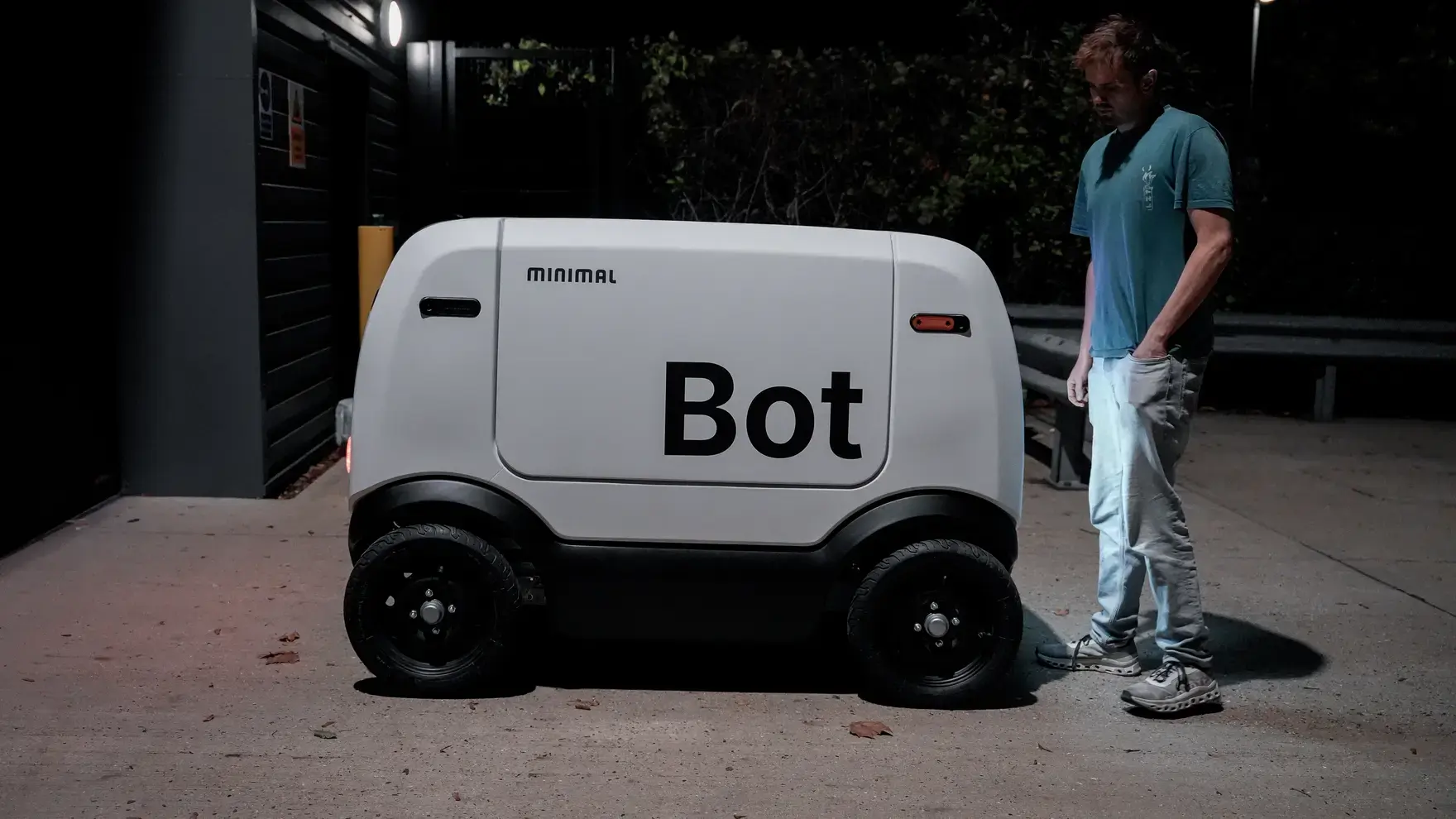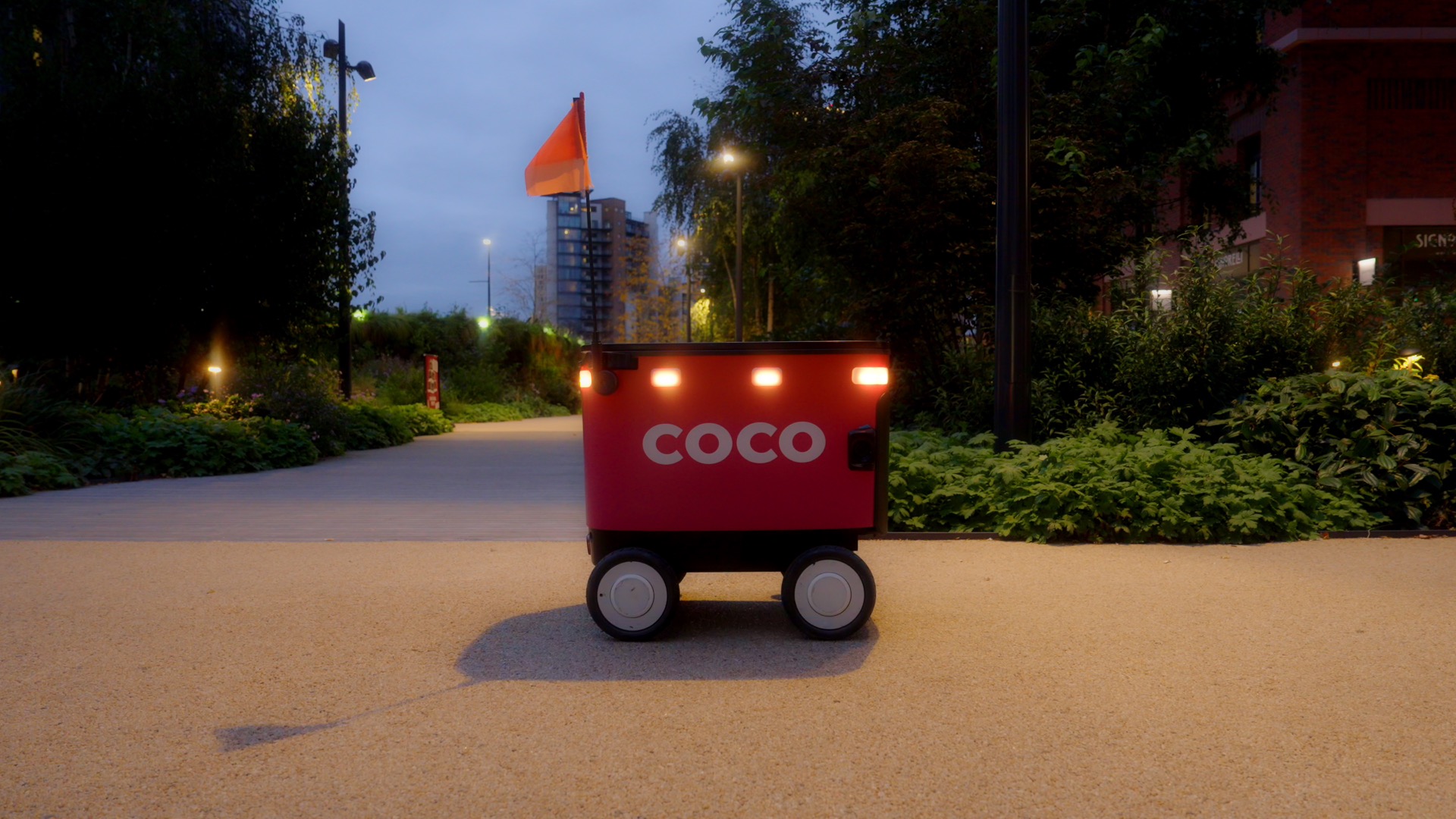
Coco Robotics, one of the largest sidewalk delivery companies in the world, made a splash last month by announcing that it was launching in five towns and cities across the UK.
Starting in London’s Canary Wharf, the delivery robots will soon be spotted in Milton Keynes, Leeds, Nottingham and Stockton-on-Tees.
With stories like these, it is usually the vehicle maker that grabs the headlines. But most need a local operator and servicing partner with on-the-ground knowledge, and those partners get far less attention.
It’s the same in the robotaxi space. Everyone heard the news when Uber announced it was launching self-driving robotaxis in Croatia, the first time in Europe. Yet has anyone heard of the operator Verne?
For Coco Robotics in the UK, the servicing partner is Tyred, a London startup responsible for keeping Coco’s delivery robots running.
Tyred is a servicing and maintenance company that lists Amazon, Google and the UK Parliament among its clients. It began as an experiment in 2023 and launched properly in May 2025, supporting individual cyclists and bike companies with battery swaps, fleet rebalancing and on-demand repairs.
It has since expanded quickly by signing fleet operators including Voi and Zoomo to provide on-the-ground logistics in London. The Coco Robotics deal is its first move into the robotics sector.
“We’ve never been short of jobs,” explains Nikita Baranov, Tyred’s Co-founder and COO.
In July, Tyred secured a seed raise of £2.5 million and is now in talks about a much bigger investment deal next spring. It has a team of just under 80 staff including freelance drivers, mechanics and battery swappers.
Delivery robots, a natural fit
Tyred was introduced to Coco and the two companies ran a trial in Canary Wharf.
“For us it was a learning experience to see if our infrastructure could accommodate these types of vehicles, which it did,” Nikita says.
“We’ve proved that this model works. Our infrastructure is really compatible with high-scale, fast-growth companies.”
Tyred has been Coco’s partner in every UK city from day one. As part of the partnership, Tyred is running fleet rebalancing, retrievals, battery swapping and emergency tasks.
“The fact that Coco launched in London first is pretty impressive. Canary Wharf was a good launch spot as it has a very concentrated delivery ecosystem, full of office workers.”
Four cities and counting
If Canary Wharf was the proving ground, the rollout elsewhere has been startlingly quick. Tyred began first deployment testing in Leeds in early November, having moved all its vehicles there and set up its operation. It is effectively a dry run to check that the software works and that the local team is comfortable with it.
Nottingham and Milton Keynes have gone through the same process and all locations will be ready to go live soon, with Coco leading the coordination of these deployments with local authorities and stakeholders. Local investment and employment are also key parts of Coco’s engagement with councils.
“There is a lot that goes into it. Negotiating leases, finding people, interviewing them, getting the vehicles prepared, tools, schedules, operations,” Nikita says.
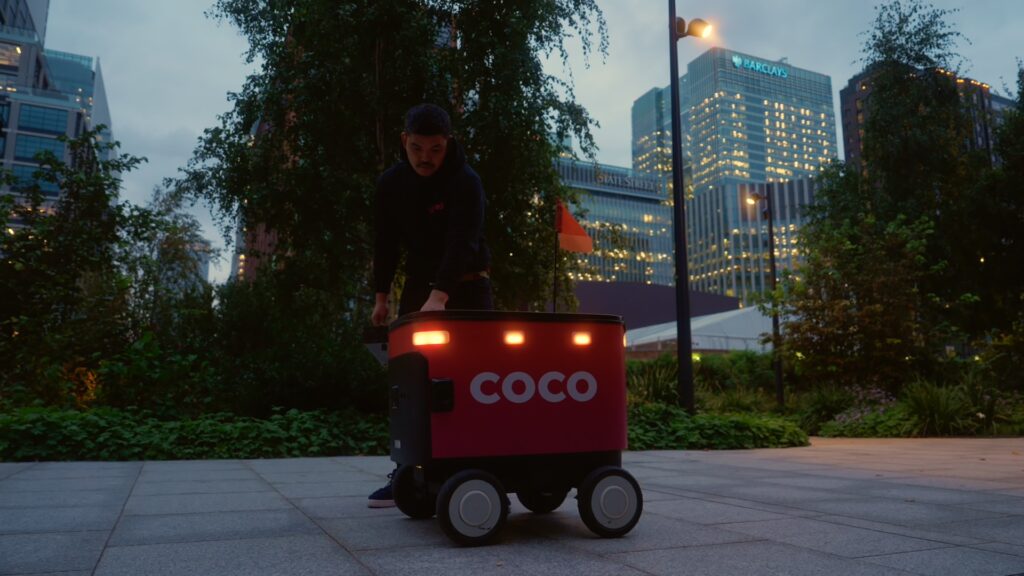
Tyred’s playbook is prepared in advance, built around three elements: a base, vehicles and a city launcher. The base is the local site for storage, maintenance and charging. The city launcher is effectively a general manager who builds the local team, while the vehicles come from the OEM.
Driving down the cost of ownership
Servicing robots is only one part of Tyred’s growing business plan. Nikita says the company’s broader goal is to cut the total cost of owning and running any light urban vehicle, whether that is a Lime bike, a cargo bike or a delivery robot.
Insurance is a big part of that. Nikita argues that cover for micromobility vehicles is too generic, and that almost every fleet vehicle already generates sensor data that insurers largely ignore. Tyred wants to use it for behaviour-based underwriting, assessing each fleet and each vehicle on how it performs and pricing cover dynamically. The same data would drive predictive maintenance.
Tyred does not plan to build its own hardware to collect it. Nikita says developing an IoT device would take one to two years, and today’s vehicles already come packed with sensors. “We’d rather build a prediction algorithm than build the hardware from scratch,” he says.
The second lever is charging. Tyred is the exclusive UK partner of PowerShelter and is building a national network of charging stations open to any fleet, from robots to Voi bikes. “Think of it as petrol stations, but for bikes,” Nikita says.
The aim is to bring operators closer to high-demand areas. In the case of London, most fleet warehouses sit outside the centre even though most of the activity happens there, so batteries and vehicles are shuttled back and forth. Nikita describes the equation for logistics partners as “labour, vehicle and location”. By removing the need for the last of those, he says, operators no longer have to price in “expensive warehousing, long leases and business rates”.
Coco’s London operation is still growing, and Nikita acknowledges that “there will be further challenges when operating up to 1,000 robots. With scale, more problems will come.”
If the robots do arrive in the numbers many expect, someone will have to keep them moving, and Tyred is laying the foundations to be that someone in every UK city Coco wants to reach.