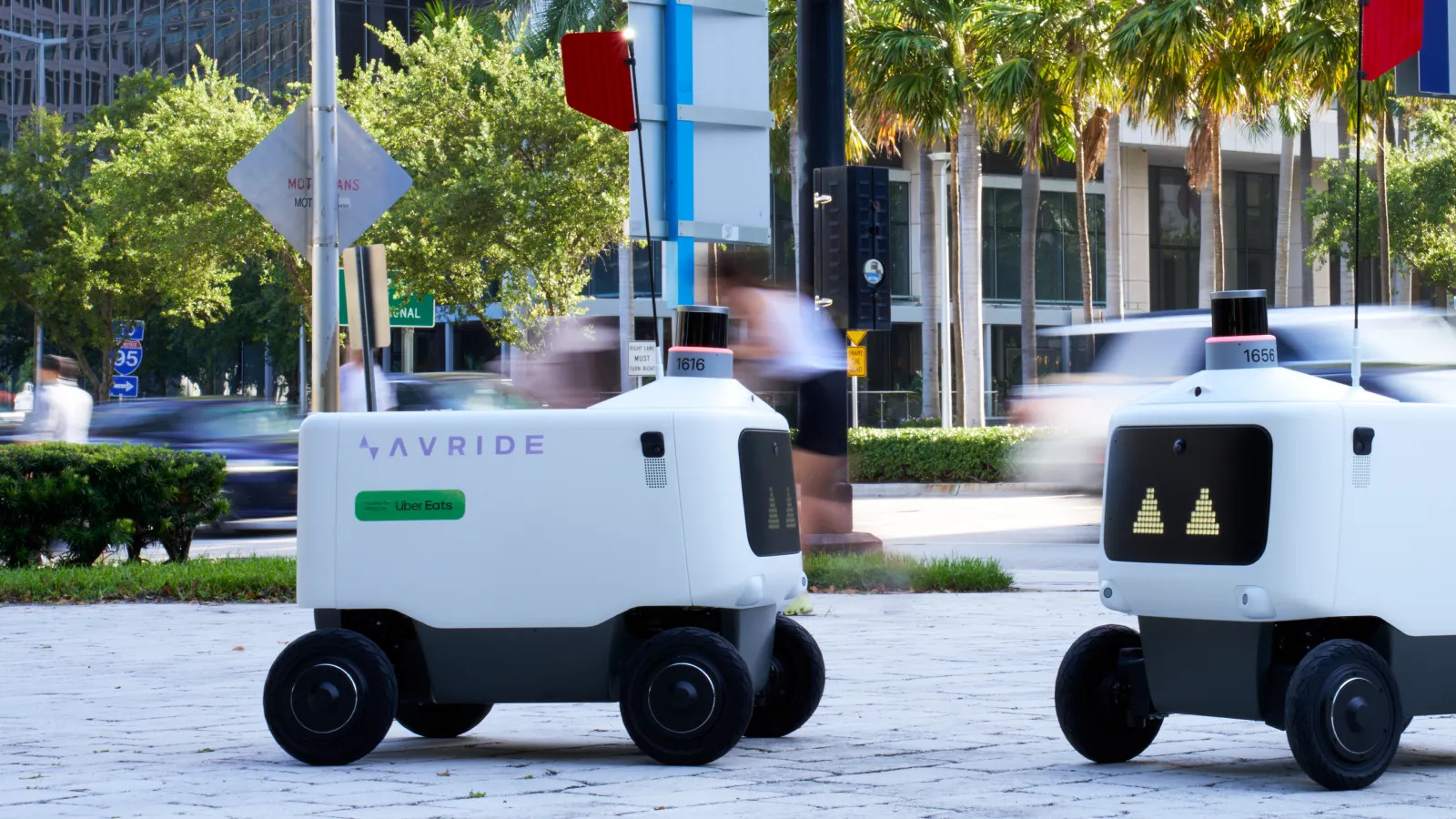
Coco Robotics’s CEO says the UK is central to the company’s next chapter.
“London is becoming one of the physical AI centers of the world,” Zach Rash, Coco’s co-founder and CEO, tells IZON in an interview.
The Los Angeles-based company has around 1,000 robots deployed across seven US cities, as well as Helsinki in Finland, making it one of the largest sidewalk delivery fleets in the world.
It is now bringing them to the UK through an exclusive partnership with Deliveroo, starting in London’s Canary Wharf last month. Four more areas follow in the coming months: Milton Keynes, Leeds, Nottingham and Stockton-on-Tees.
The scale of the plan is striking next to the UK’s incumbent. As IZON reported in September, it has taken Starship Technologies 12 years to deploy around 300 robots on UK streets, and the company says regulatory uncertainty has pushed Britain down its priority list.
Rash is betting that Coco can move faster. The question is whether it can make it work in a market where the rules are still unwritten.
From a student flat to 1,000 robots
Coco began more than six years ago as a university project. Rash and his UCLA roommate Brad Squicciarini formed a robotics research lab in their second year, and started with a prototype by fulfilling grocery orders from their living room.

Their service-first approach shaped the business. Rash says the early hires were restaurant workers and managers rather than roboticists, a deliberate contrast with an industry he says is full of deeply technical teams “assuming the technology will figure out how to commercialize itself”.
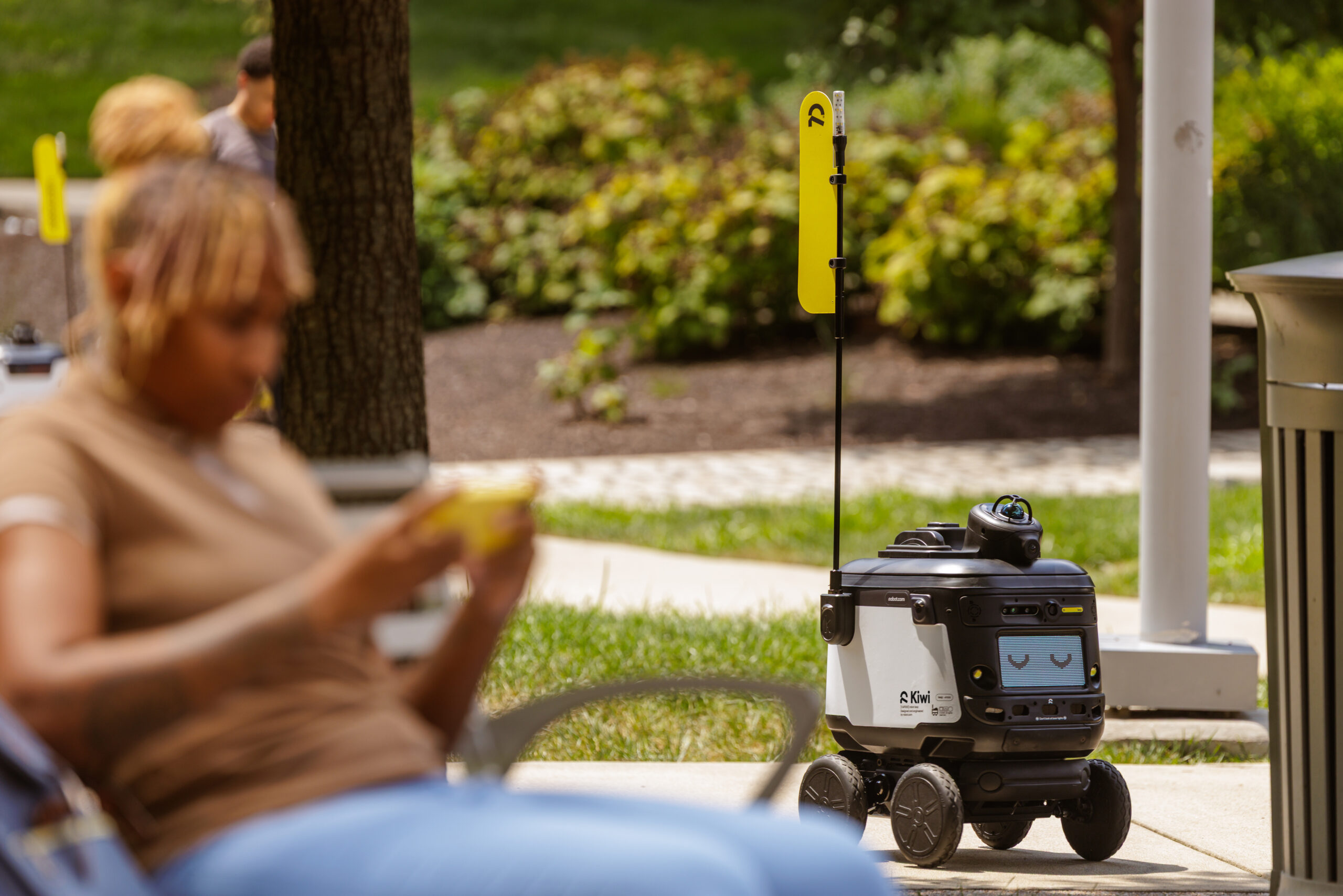
The robots are built for the everyday basket. Each can carry four grocery bags or eight extra-large pizzas, and moves at a brisk walking pace on the pavement.
“We don’t just deliver food or just groceries; we like to deliver everything because we want to be doing deliveries throughout the day,” Rash explains.
Los Angeles is its largest market by some distance, and Rash says Coco now handles a material share of orders in some of the city’s oldest neighbourhoods.
Why London, and why Deliveroo
Rash says London ticks every box: dense, walkable and heavily reliant on delivery across food, groceries, laundry and retail. It is also fiercely competitive, with Just Eat, Deliveroo and Uber Eats all fighting for share, a contrast to US markets that have consolidated around one or two players.
At the pace these platforms are growing, Rash argues there will be a severe driver shortage. Robots, he says, are a complement to human couriers rather than a replacement.
The Deliveroo deal is exclusive in both directions. Coco becomes Deliveroo’s exclusive third-party pavement robot partner in the UK, while Deliveroo is Coco’s exclusive UK launch partner. Deliveroo’s parent, DoorDash, has been a Coco partner in the US for years.
Rash says he has not seen an arrangement like it elsewhere in the industry, and that it shows how much weight both sides are putting behind the launch. The aim, he says, is to make the robots part of Deliveroo’s growth plans and supply chain over the long term.
“This isn’t an R&D project or an announcement that we’re coming, we’ll put a robot out and see how it goes,” he says. “There’s a lot of intent behind it. This is a systems-level approach.”
The pitch that won Sam Altman
Altman first invested in Coco in 2020 and led its Series A. He remains, in Rash’s words, a large shareholder.
Rash believes the appeal lay in how Coco sequenced its product. Rather than chase a perfect, sensor-laden autonomous robot, Coco built a cheap, reliable one and wrapped a “real delivery service” around it, using remote teleoperators heavily at first.
“We are not going to build a $100,000 perfect robot with all the sensors and throw all our time and energy into solving the autonomy problem,” he recalls telling investors.
Every delivery through busy urban streets generates expert demonstrations for training AI models, a dataset Rash says doesn’t otherwise exist. Teleoperation is treated as a backstop, much as customer support is for any product and should not be something to hide. “Roboticists tend to find teleoperation taboo, like cheating,” he says. “We said everyone has to use teleoperation…and if it’s going to be important, why don’t we get really good at it from the beginning as a means of training the models? I think that resonated with Sam.”
The robots that “waddle”
Back in the UK, there is the matter of Britain’s relationship with street furniture. Anyone who has covered micromobility will remember the shared bikes dragged from Bristol’s canals, and the scooters that disappeared almost as quickly as they arrived. Delivery robots have not been spared either: Starship recently had to pull its vehicles from Sheffield amid reports of vandalism, with visibility flags being snapped off and graffiti sprayed.
Rash is unfazed. He and Brad once earned about $20 a night charging Bird scooters in their college flat, and he says Coco has seen nothing comparable in the same Westwood streets where scooters were once routinely trashed.
He offers two reasons for this. First is that the sector has matured a lot. “It’s not a novel thing anymore,” he says.
“You have city bikes, scooters, Lime bikes, all these different technologies out and about. I’m sure vandalism still happens on those devices, but walking around, it feels like that’s normalised a lot compared to 2018.”
Coco has also leaned heavily into the design and branding of the robot. The company chose “Coco” because it topped a list of cute dog names, and the robot is a pink box on wheels with no eyes and no gimmicks. Staff call them Cocos, not robots.
“The robot is a pink thing that says Coco, waddling around on its wheels, delivering your neighbour’s family’s dinner from a local business down the street,” Rash says.
The effect, he claims, is that people see a neighbour’s dinner rather than a piece of technology, and become protective of it. Whether that holds in the UK is untested.
Regulation: local first, national later
The UK currently has no dedicated national framework for pavement robots, and Coco is following the council-by-council approach that has worked for it in the US: starting small with a few merchants and sharing data with city officials.
Rash says that works at the start, but cannot last. He wants national guidance from the Department for Transport, noting that Chancellor John Healey’s recent speech on sandboxing powers, which named pavement robots, was a sign the government is paying attention.
“You don’t want completely different rules and regulations as you move from one city boundary to the next,” he says.
Mapping hazards for the blind
One part of the rollout is likely to matter to the accessibility campaigners who have challenged pavement robots in the UK. Coco’s robots log obstacles such as toppled scooters, damaged pavements, construction zones and flooding, and share it fleet-wide to improve routing.
Through a partnership, which began in Finland, that data also feeds BlindSquare, an app for blind and visually impaired people that crowdsources hazards. Coco publishes alerts when a hazard appears and when it is cleared. In Helsinki, the company also holds an EU grant to use its data to inform decisions on traffic lights and pedestrian infrastructure.
Building a European base
Rash says Coco is exploring a London office as a hub for European operations, and over time a second corporate HQ. There is a UK team in place, plus general roles open, and each deployment brings local technicians and field operators to repair and manage the fleet.
“We’d like to make London a center of gravity for our European operations,” he says.
For a company with 1,000 robots and a plan to launch in five UK areas almost at once, it is a statement of intent. Whether the British public and its regulators are ready is the next test.