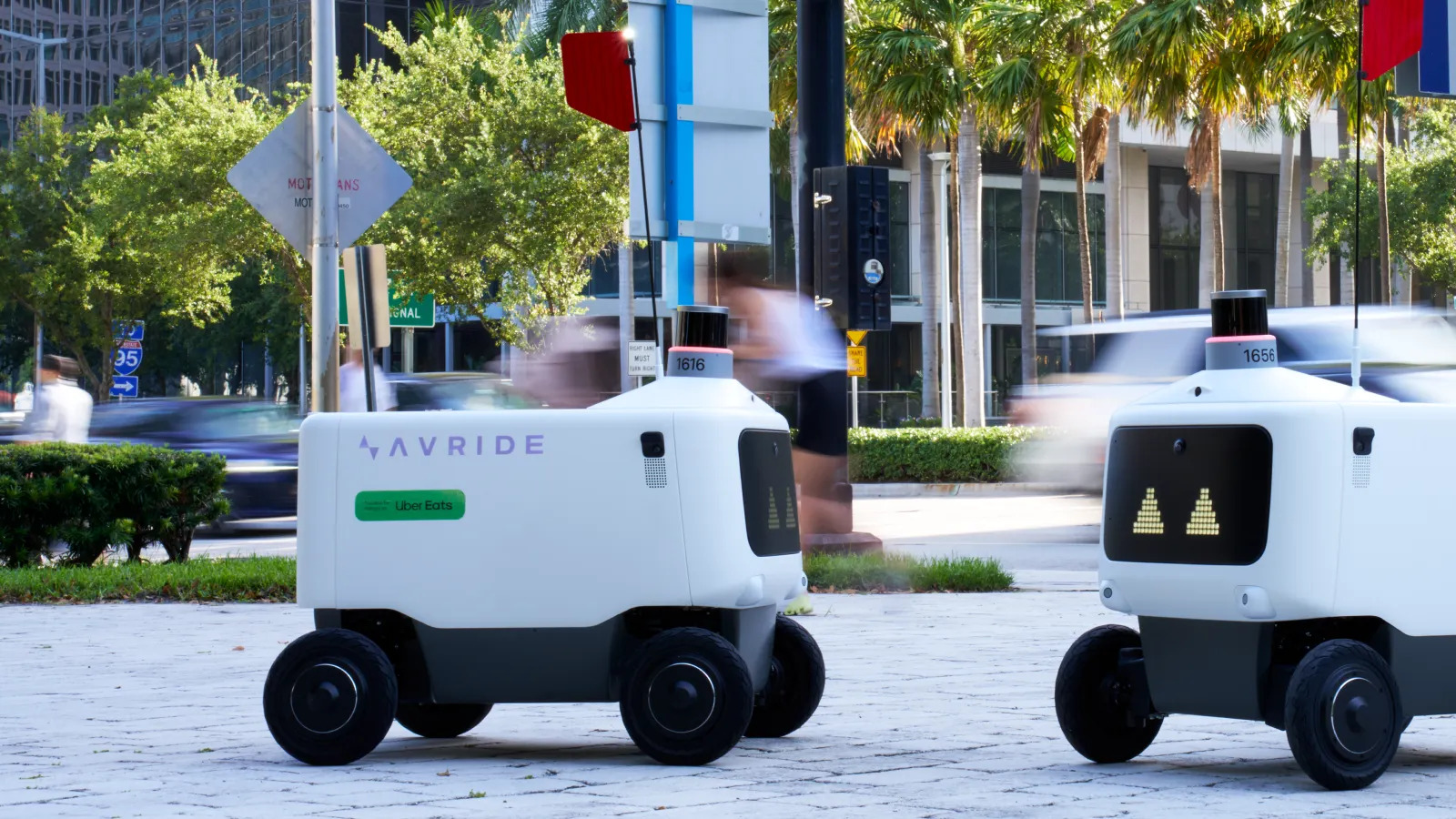
Miami has emerged as one of the US’s leading hotspots for autonomous delivery robots, hosting Coco Robotics, Serve Robotics, Pinkbot and now Avride.
The port city’s vibrant, year-round tropical climate makes it an ideal environment for autonomous delivery. From Cuban cafés and trendy restaurants to fresh seafood along the coast, Miami offers plenty of dining options.
Avride is the latest company to deploy its Personal Delivery Devices (PDDs) there through a partnership with Uber Eats, the on-demand delivery subsidiary of Uber, which now works with all four robotics companies operating in the city.
“Miami has quickly become a leading city for this technology, and we’re delighted to partner with Avride to bring robot delivery to even more customers,” said Aaron Emrich, Global Head of Autonomous Delivery at Uber Eats.
How robot delivery works
When placing an order through Uber Eats, eligible customers may have the option to receive their delivery via an autonomous robot.
Before a robot is dispatched, customers can choose whether they would like their order delivered by an autonomous robot or a courier. Throughout the journey, they can track the robot’s progress in real time within the Uber Eats app.
Once the robot arrives, customers receive a notification in the Uber Eats app. Tapping the “Unlock” button opens the robot’s cargo compartment, allowing them to collect their order. The robot will wait at the delivery location for up to 10 minutes before continuing on its route.
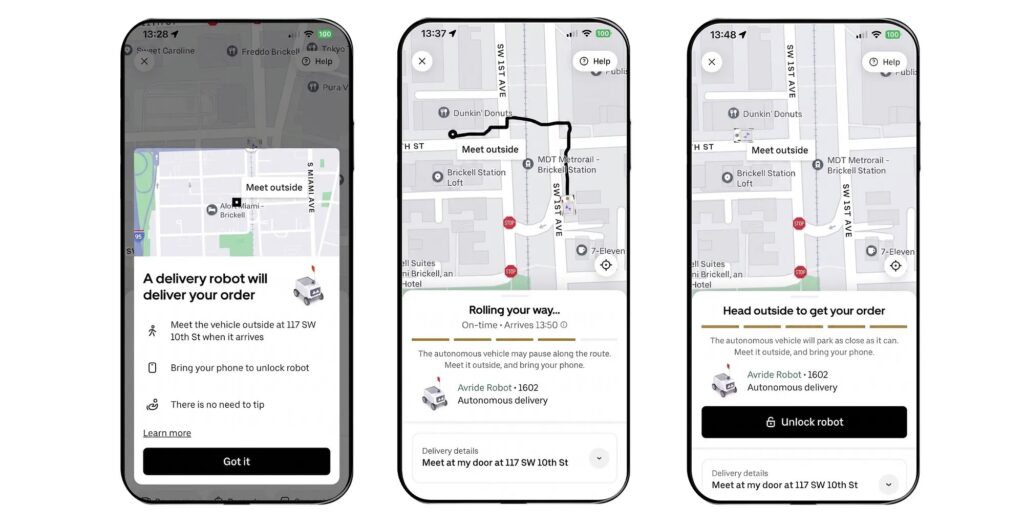
As with any other Uber Eats delivery, customers can rate their experience in the app after receiving their order. Robot deliveries also eliminate the need for tipping, making the process more convenient.
Made for the last mile
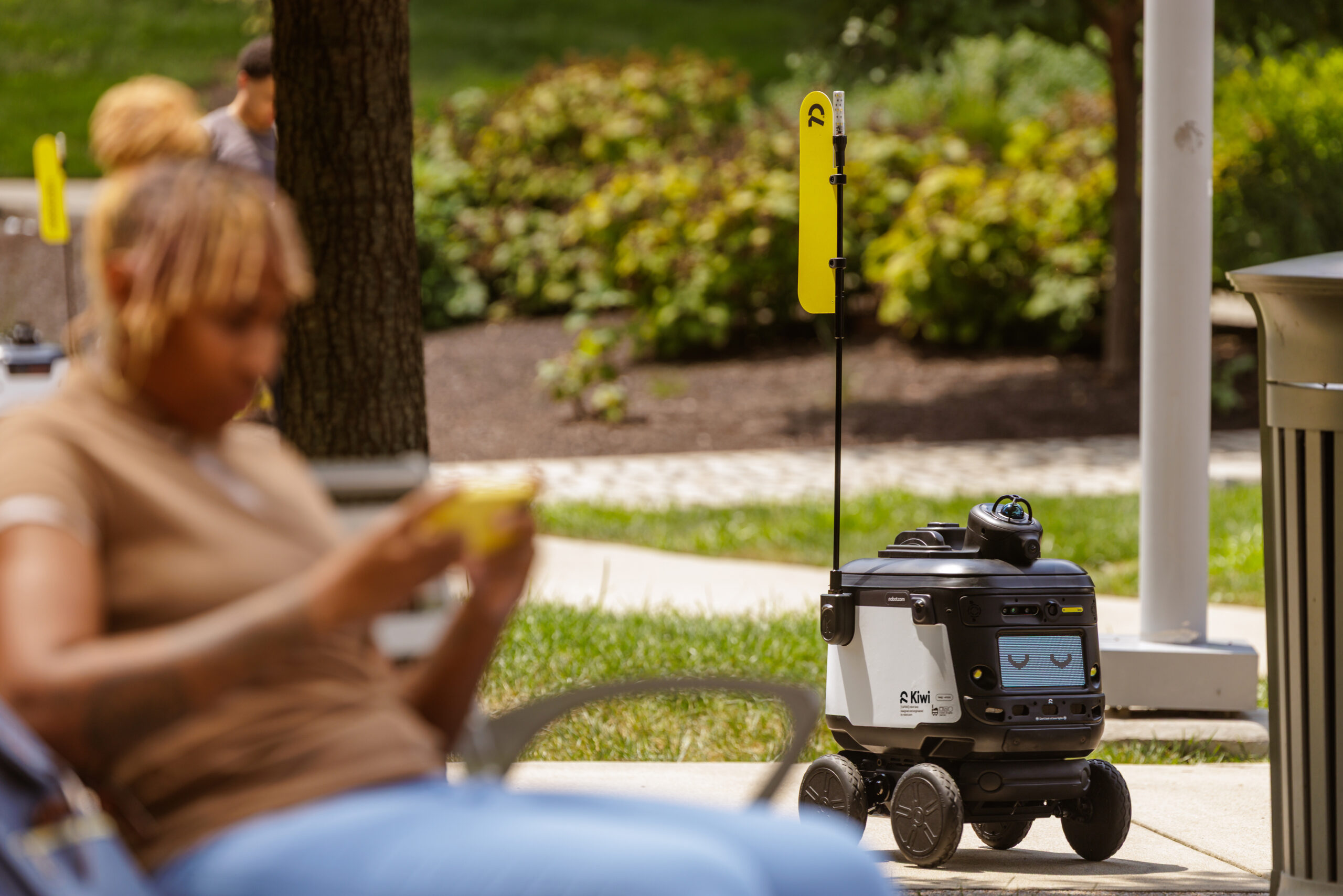
Autonomous delivery robots are designed to safely navigate sidewalks and pedestrian environments using a combination of cameras, sensors, GPS and onboard computing systems.
They operate at pedestrian-friendly speeds while detecting and responding to people, pets, bicycles and other obstacles in real time.
Miami is known for its sunshine, but its coastal location means weather conditions can change quickly.
While most robots are rated to IP66 for water and dust resistance, their performance in South Florida’s heavy rain and seasonal King Tides will put their weather resilience to the test.