The car is being replaced, not by a better car, but by a new class of city robot.
For more than a century, vehicles have been designed around a single dominant function: transportation. Whether internal combustion, electric, connected, or increasingly autonomous, the core logic has remained largely unchanged. A vehicle moves people or goods from point A to point B as efficiently as possible.
PIX Moving argues that this era is ending.
The Chinese physical AI company is building what it calls Autonomous Mobile Spaces, a new category of purpose-driven mobility that adapts to different needs, whether as a shuttle, workspace, café, retail store or mobile classroom.
Turning travel time into living time
PIX Moving’s core products are the RoboBus, RoboTaxi, RoboVan, and RoboShop, all built on a shared modular chassis powered by an autonomous driving stack.
Each unit is designed as a reconfigurable urban robot capable of switching functions depending on context and demand.
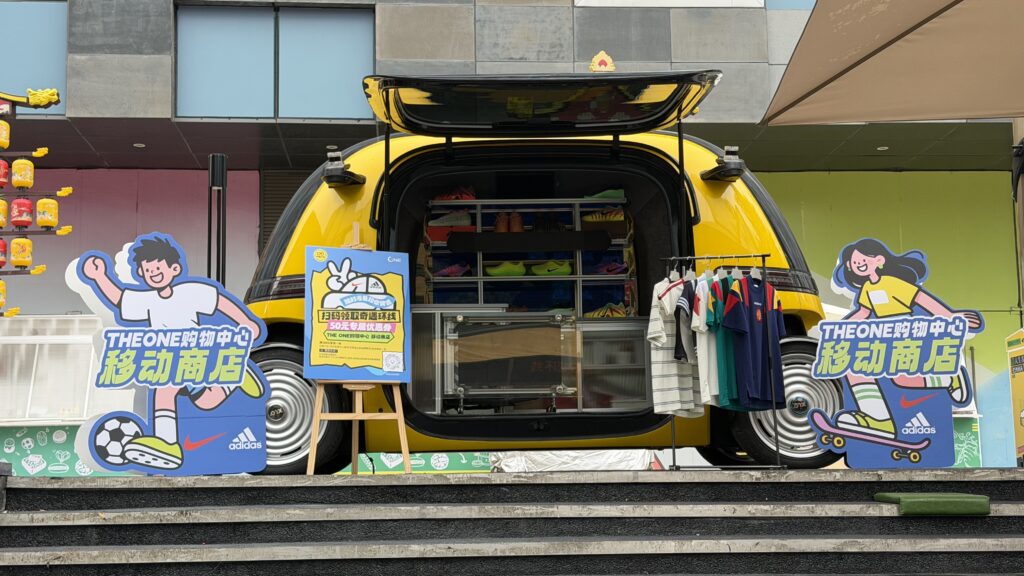
A RoboBus might operate as a community shuttle during peak hours, then transform into a mobile cultural space later in the day. A RoboShop can function as a café in one district, a retail pop-up in another, or a small exhibition space in a tourism zone.
“We believe autonomy is not just about removing the driver, but about reimagining how people use travel time, whether for productivity, social interaction, or entertainment,” Alexandru Vasiliu, Managing Director for Europe, tells IZON in an interview.
Vehicles as adaptive urban spaces
The RoboBus demonstrates how PIX is rethinking vehicle architecture. Built to carry six passengers at speeds of up to 15.5 mph, the autonomous shuttle eliminates the traditional driver’s cockpit, freeing up the cabin to function as a flexible shared space. Large panoramic windows maximise visibility, while digital displays provide route guidance, rear-view camera feeds and contextual information throughout the journey.
“When I first rode it in China, I felt like I was on a cable car,” Vasiliu says. “You’re moving through traffic but there’s no stress, no sudden braking, no worries. You simply enjoy the surroundings. What excites me is that the future cabin is not a fixed environment. It is a programmable space.”

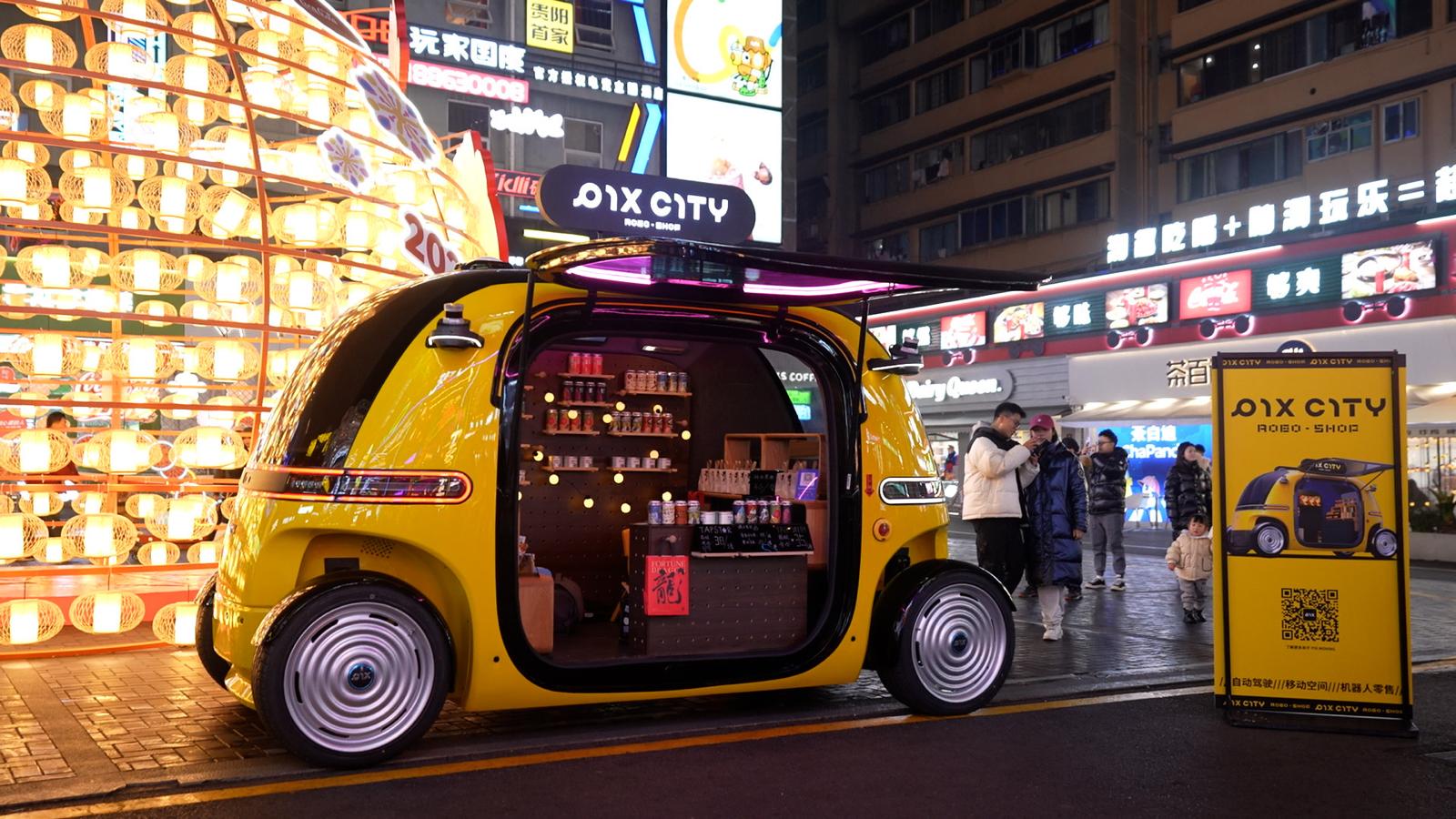
The RoboShop is designed as an electric, autonomous-ready retail vehicle, helping brands reach customers without the limits of a fixed storefront.
“The future of retail is mobile,” Vasiliu says. “We want to transform the way brands connect with people while opening up new revenue streams.”
PIX’s vehicle design philosophy reflects founder Angelo Yu’s background in architecture and engineering, rather than traditional automotive design.
“I’ve always looked at mobility through the lens of the city, not the vehicle,” Yu tells IZON.
“This is not just about moving people from A to B but how people and urban environments shape each other. At PIX, we rethink mobility as a human-city interface: each RoboBus, RoboShop or RoboVan is an evolving mobility cell that senses, learns and connects as part of a living, adaptive urban system.”
Robots in action
PIX Moving currently has more than 200 vehicles in active operation worldwide.
The company’s largest deployment is in Guiyang, China, where a fleet of RoboBuses circulate through the city centre on a fixed route known as the “WonderLoop.”
Designed as more than a conventional shuttle system, the WonderLoop turns sightseeing into an immersive experience, guiding visitors between key urban landmarks. It combines mobility, tourism and digital storytelling into a single integrated journey that feels distinctly different from traditional public transport. Soon PIX will be embedding generative AI into the experience as a real-time guide, offering contextual information about museums, restaurants and cultural sites as passengers move through the city.
PIX is also running pilots in countries including Italy, China, the United States, India, Spain, Germany, South Korea and Japan.
In Japan, PIX recently reached a key regulatory milestone after being issued an official vehicle license plate for its RoboBus. This represents formal recognition that the vehicle meets stringent safety and operational standards required to operate on public roads.
The pilots worldwide range from smart city projects and commercial tourism trials to property developments, urban renewal projects and campus shuttles.
“Robotaxi dominates the headlines but our robots are quietly proving what autonomy looks like when it becomes part of daily city life,” said Vasiliu.
What’s next
PIX plans to double its footprint by year-end with 400 active vehicles. Its range of mobile robots will be on display at the upcoming Paris Motor Show in October, introducing the platform to a wider industry audience and showcasing how autonomous city robotics can operate in real urban environments.
“We want to showcase to the world a new way of thinking about transport. Travel time is no longer lost time. This is a new kind of urban space where we reclaim our time for work, learning, social connection or simply relaxation.”